The story of Monaco 20th century change is one of rapid reinvention on a tiny strip of land. In just a few decades, the Principality moved from a quiet Riviera enclave to a highly visible, hyper-modern microstate. Across the Monaco 20th century period, political reforms, bold urban planning and economic diversification worked together to redefine everyday life and the country’s global image. Below are ten decisive transformations that explain how this shift happened.
1. Constitutional reform and political modernisation
At the start of the Monaco 20th century era, power in the Principality was still highly concentrated in the hands of the Prince. Gradually, constitutional reforms introduced a more structured political system, with a National Council, clearer separation of powers and stronger legal guarantees for residents.
These changes did not turn Monaco into a full parliamentary democracy, but they stabilised governance and reassured investors and foreign residents that the rule of law would be respected. Over the Monaco 20th century timeline, this stability became a crucial asset for attracting capital and long-term residents.
2. Urban expansion beyond the old rock
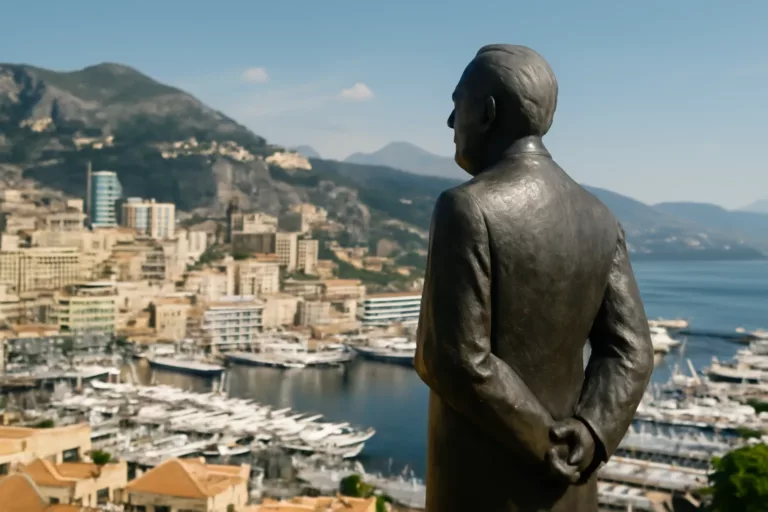
Early in the 1900s, Monaco was still largely centred on the Rock and the casino quarter. As the population grew, the Principality began to push upwards and outwards. High-rise residential blocks appeared, and formerly quiet slopes turned into dense neighbourhoods that defined the Monaco 20th century cityscape.
Urban planning became a strategic tool: every new building, road and public garden had to earn its place in a territory of barely two square kilometres. Step by step, this approach turned a compact historic town into a vertical city-state.
3. Land reclamation: creating territory from the sea
One of the most visible transformations of the Monaco 20th century story was the decision to build into the Mediterranean itself. Through large-scale land reclamation, the Principality gained precious hectares for housing, roads and public facilities that could not fit on the original coastline.
These projects changed the seafront and allowed the creation of entire districts that simply did not exist at the start of the century. They also highlighted a key feature of Monaco 20th century policy: using engineering to compensate for a lack of natural space.
4. Economic diversification beyond the casino
For decades, Monaco’s image was tied almost entirely to its casino. Over the Monaco 20th century period, the authorities deliberately diversified the economy. Banking, financial services, shipping, luxury retail and high-end real estate gradually took a larger share of activity.
This shift reduced dependence on gaming revenues and made the Principality less vulnerable to changes in tourism trends or gambling regulations abroad. It also shaped the social profile of Monaco 20th century residents, bringing in more professionals and entrepreneurs.
5. The rise of finance and high-value services
From the mid-century onwards, Monaco positioned itself as a hub for private banking and wealth management. A favourable tax environment, political stability and discretion attracted affluent residents and international companies looking for a secure base on the Mediterranean.
Modern office buildings, professional services and specialised advisers followed, turning what had been a resort town into a compact service economy with global reach. In this sense, Monaco 20th century development mirrored broader trends in advanced economies, but on a much tighter territorial scale.
6. Tourism transformed by glamour and events
Tourism in the early 1900s was seasonal and centred on winter visitors. Over time, Monaco built a year-round calendar of high-profile events that reshaped its image and underpinned Monaco 20th century prosperity.
- International motor racing brought worldwide media coverage and dramatic images of the harbour and streets.
- Cultural festivals filled theatres and concert halls, reinforcing the Principality’s reputation for refinement.
- Luxury hotels and restaurants targeted an increasingly global clientele with high spending power.
This new model turned tourism into a steady, diversified pillar of the local economy and supported investments in infrastructure and public spaces.
7. Cultural institutions and soft power
Another decisive transformation was the investment in culture as a form of soft power. Ballet, opera, museums and scientific institutions were supported and promoted as part of Monaco’s identity and its Monaco 20th century strategy for visibility.
These institutions did more than entertain visitors. They signalled that the Principality was not only a place of leisure, but also a centre of artistic and intellectual life, helping to attract residents and partners who sought more than a simple resort.
8. Social change and demographic growth
Throughout the 20th century, Monaco’s population increased and diversified. Workers arrived from neighbouring countries, while wealthy residents moved in from across Europe and beyond, all contributing to Monaco 20th century growth.
This mix created a complex social fabric: a small core of Monegasque nationals, a larger community of long-term residents and a constant flow of seasonal workers. Housing policy, education and healthcare had to adapt quickly to this reality, balancing social cohesion with strong market pressures.
9. Transport, infrastructure and everyday life
A modern economy required modern infrastructure. Roads were reconfigured, tunnels were dug into the rock and lifts and escalators helped residents navigate the steep slopes between districts. Public transport improved, and the port was upgraded to welcome larger yachts and cruise ships.
These practical changes made daily life in a dense city-state more manageable and supported further economic growth. By the end of the Monaco 20th century period, mobility solutions had become a defining feature of how residents experienced the city.
10. Environmental awareness and controlled growth
By the late 20th century, the limits of physical expansion were clear. The Principality began to focus on controlling growth, protecting the marine environment and improving energy efficiency in buildings as part of a more cautious Monaco 20th century development model.
Urban projects increasingly incorporated green spaces, coastal protection and technical solutions to reduce pollution, signalling a new phase in the long transformation of the territory and preparing the ground for 21st-century challenges.
Key lessons from Monaco’s 20th-century evolution
Taken together, these ten transformations show how a very small state can reinvent itself without losing its core identity. Careful planning, targeted investment and a willingness to adapt allowed Monaco to move from a single-industry resort to a complex, service-based city-state within one intense Monaco 20th century cycle.
For anyone interested in how places evolve, the trajectory of the Principality across the 20th century offers a compact, concrete case study of modernisation under tight spatial constraints, highlighting how strategy and geography interacted on a micro scale.
FAQ about Monaco in the 20th century
Why was land reclamation so important for Monaco?
With almost no spare land, reclamation offered the only realistic way to add housing, roads and public spaces, making long-term economic and social development possible.
Did Monaco’s economy still depend mainly on the casino?
No. Over the century, finance, tourism, real estate and services became major pillars, reducing the relative weight of casino revenues in public finances.
How did urban planning cope with such a small territory?
Authorities built upwards, used tunnels and lifts, and planned dense mixed-use districts, aiming to balance growth, liveability and limited space.
What role did culture play in Monaco’s transformation?
Cultural institutions and events strengthened the Principality’s international image and helped shift it from a simple resort to a recognised cultural destination.
How did everyday life change for residents?
Residents saw better infrastructure, more services and greater economic opportunity, but also rising property prices and denser urban living.