
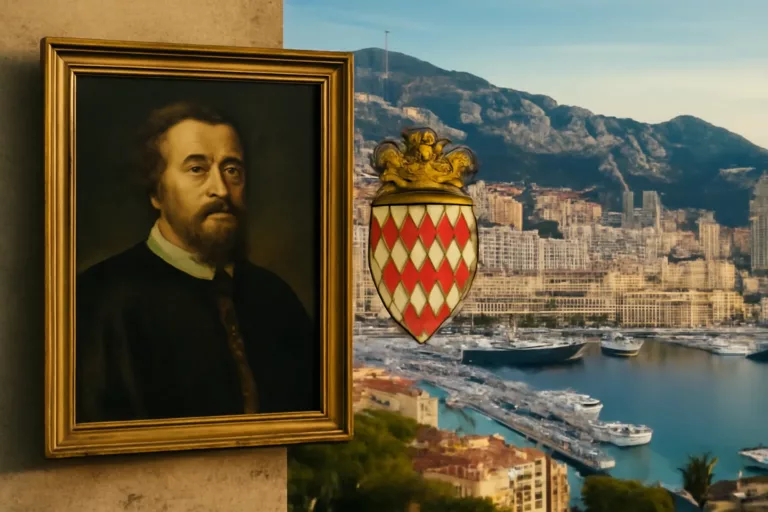
The Grimaldi dynasty has shaped Monaco for more than seven centuries, turning a small Mediterranean rock into a sovereign principality known worldwide. Understanding how this family rose from Genoese merchants to reigning princes reveals why Monaco looks and functions as it does today.
Genoese origins of the Grimaldi family
The story begins in the powerful maritime republic of Genoa in the Middle Ages. The Grimaldi were a prominent noble and merchant family, active in trade, banking and naval affairs. Like many Genoese clans, they formed political alliances and rivalries that could make or break fortunes.
Within Genoa, factions were often divided between supporters of the papacy and supporters of the Holy Roman Emperor. The Grimaldi family aligned themselves with the Guelfs, backing the pope. This choice would push them into conflict with rival families and, eventually, drive them to seek power beyond Genoa’s walls.
As Mediterranean trade expanded, control of ports and fortresses along the Ligurian coast became essential. The rocky promontory of Monaco, with its natural harbour and commanding position, attracted the attention of ambitious Genoese families, including the Grimaldi.
The capture of Monaco in 1297
The decisive moment came in 1297. According to tradition, François Grimaldi, known as “Malizia”, entered the fortress of Monaco disguised as a Franciscan friar. Once inside, he opened the gates for his men, seizing the stronghold from a rival faction.
This dramatic episode, half history and half legend, symbolises the beginning of Grimaldi rule in Monaco. The image of François Grimaldi with a sword in one hand and a monk’s habit still appears on Monaco’s coat of arms, reminding residents and visitors of this founding act.
However, the early years were far from stable. Control of Monaco passed back and forth between rival powers. The Grimaldi had to negotiate, fight and invest heavily to secure lasting authority over the rock.
From seigneury to principality
During the fourteenth and fifteenth centuries, the Grimaldi gradually consolidated their hold on Monaco. They obtained titles, lands and recognition from regional powers, including the kings of France and the dukes of Savoy. The territory remained small, but the family’s influence grew through diplomacy and strategic marriages.
By the early modern period, the rulers of Monaco were recognised as princes, not merely local lords. This elevation in status allowed them to negotiate on a more equal footing with neighbouring states. It also marked the transformation of Monaco from a contested fortress into a hereditary principality under the continuous leadership of one family.
To survive between larger powers, the Grimaldi princes learned to balance alliances carefully. At different times they leaned towards France, Spain or the Holy Roman Empire, always seeking to preserve as much independence as possible.
Key turning points in dynastic continuity
The 1641 treaty and French protection
A major turning point came in the seventeenth century, when Monaco aligned firmly with France. A treaty signed in the 1640s placed the principality under French protection while confirming the ruling family’s sovereignty. In exchange, the princes provided military and diplomatic support to the French crown.
This arrangement gave Monaco a powerful protector and allowed the Grimaldi line to continue without being absorbed into a larger kingdom. It also introduced strong French cultural influences that are still visible in Monaco’s language, architecture and institutions.
Revolution, loss and restoration
The French Revolution and the Napoleonic era brought serious disruption. Monaco was annexed, and the ruling family temporarily lost control of its territory. Many small states disappeared permanently during this period, and the same fate could easily have awaited Monaco.
However, after Napoleon’s fall, the Congress of Vienna reshaped Europe and restored the principality. The Grimaldi returned, but now had to adapt to a new political landscape in which popular sovereignty and constitutional ideas were gaining strength.
Nineteenth-century modernisation
In the nineteenth century, the family faced financial and political challenges. Traditional revenues from land and taxes were no longer sufficient. To secure the future of the principality, the rulers encouraged tourism and leisure activities.
The development of casinos and luxury hotels attracted visitors from across Europe. Rail links made Monaco accessible to wealthy travellers, and the small state began to reinvent itself as a glamorous destination. This economic shift helped ensure the continuity of the ruling house by providing new sources of income and international visibility.
Twentieth century: from crisis to global image
The twentieth century demanded further adaptation. Two world wars, changing social attitudes and economic crises forced the ruling princes to rethink how they governed. Constitutional reforms gradually expanded the role of elected institutions while preserving the hereditary position of the head of state.
In the post-war decades, Monaco’s image changed again. Grand Prix motor racing, cultural events and high-profile marriages placed the principality in the global spotlight. The ruling family became associated not only with political authority but also with cultural patronage and international charity work.
These developments reinforced a delicate balance: maintaining tradition and dynastic continuity while responding to modern expectations about transparency, participation and social responsibility.
How the dynasty shapes Monaco today
Today, the ruling house remains central to Monaco’s identity. The head of the family serves as prince, representing the state abroad and overseeing domestic institutions within a constitutional framework. The continuity of the line provides a sense of stability that is unusual for such a small country.
At the same time, the principality has diversified its economy beyond tourism and gaming, investing in finance, real estate and sustainability projects. The ruling family often acts as a visible advocate for these initiatives, linking centuries of tradition with contemporary priorities such as environmental protection and cultural preservation.
For residents and observers alike, Monaco offers a rare example of a medieval family maintaining political relevance in the twenty-first century by adapting, negotiating and carefully managing change.
Conclusion: seven centuries of adaptation
From its Genoese roots to its current role on the world stage, the story of the ruling house in Monaco is one of resilience and adaptation. A daring seizure of a fortress in 1297 began a long process of consolidation, negotiation and reinvention.
By navigating alliances, surviving revolutions and embracing new economic models, the family has kept its place at the heart of a sovereign state that is both historic and modern. Understanding this long arc of history helps explain why Monaco, despite its small size, continues to carry a political and symbolic weight far beyond its borders.
FAQ
When did the Grimaldi family first take control of Monaco?
The family first seized the fortress of Monaco in 1297, when François Grimaldi captured the rock in a surprise attack that became the founding legend of their rule.
Where did the Grimaldi family originate before ruling Monaco?
They originated in Genoa, a powerful maritime republic. The family were influential merchants and nobles involved in trade, banking and politics before turning towards Monaco.
How did Monaco become a principality under the Grimaldi rulers?
Over the fourteenth and fifteenth centuries, the rulers expanded their authority and gained recognition from regional powers, evolving from local lords into hereditary princes of a sovereign state.
What role did France play in the history of the Grimaldi rulers?
A seventeenth-century treaty placed Monaco under French protection while confirming its sovereignty. This alliance helped safeguard the ruling family and shaped Monaco’s culture and politics.
How has the Grimaldi family maintained its rule into the modern era?
They adapted to shifting political and economic conditions through diplomacy, constitutional reforms and economic diversification, allowing the dynasty to remain central to Monaco’s identity.