Place du Casino Monaco: Five Reasons It Became an Icon
The Place du Casino is one of the easiest places in Monaco to recognise, but its reputation is not explained by luxury cars alone. Within a small public space, visitors encounter a casino, important hotels, garden design and the architecture of a resort created to attract an international audience. The square has continued to evolve while retaining the visual relationships that make it instantly identifiable. These five perspectives adapt the French article and offer a practical way to read the square rather than simply photograph it.
In this guide: 1. An architectural ensemble rather than one landmark, 2. Four famous addresses within a short walk, 3. A stage for international attention, 4. A rewarding visit even without entering a building, 5. A district balancing heritage and change.
1. An architectural ensemble rather than one landmark
The square works because its buildings reinforce one another. The Casino de Monte-Carlo brings the vocabulary of Belle Époque grandeur, while the adjoining historic hotels and hospitality addresses frame the pedestrian experience. Architectural details such as domes, balconies, stone façades and entrances reward close inspection. The whole composition communicates the story of Monte-Carlo as a purpose-built resort district. A photograph of the casino alone misses the importance of the open public space that makes its façade visible from a distance.
2. Four famous addresses within a short walk
The Casino de Monte-Carlo, Hôtel de Paris, Café de Paris and Opéra de Monte-Carlo are closely associated with the same district. Each has a different purpose: gaming and heritage, grand hospitality, dining and theatre. Their proximity encourages visitors to experience them as one destination. It also shows how carefully the original resort model connected services. Instead of moving between distant attractions, guests could cross the square and encounter the major elements of the Monte-Carlo experience in a few minutes.
3. A stage for international attention
Monte-Carlo's image has been circulated through travel writing, photographs, televised events and coverage of the principality. The square provides a recognisable setting because its architecture is highly distinctive and compact. Monaco's major events contribute to the wider destination identity, although event-specific routes and restrictions can vary. The square is best understood as a place that lends a visual signature to the principality. Its prominence is the result of history, maintenance and repeated representation, not solely a modern marketing invention.
4. A rewarding visit even without entering a building
Many first-time visitors appreciate the square as a public-space experience. Its façades can be studied from outside, and the landscaping offers changes of perspective as one moves around. Take time to look at the relationship between gardens, reflections and historic entrances. The square feels different by day and after dark, when architectural lighting changes how the buildings appear. Entry conditions for businesses on the square do not necessarily apply to the public outdoor areas, so treat them as separate parts of a visit.
5. A district balancing heritage and change
The importance of the Place du Casino is not only historical. Roads, paving, landscaping and visitor circulation need to respond to contemporary urban life while preserving the identity of the site. This balance between continuity and adaptation helps explain why the location remains compelling. The buildings are not museum pieces removed from everyday use: they continue to function within a busy city. Visitors can observe how public space supports a major destination without losing its architectural coherence.
Practical route around the square
Begin with the casino façade, continue toward the Hôtel de Paris and Café de Paris, then consider the opera house as part of the same architectural grouping. Allow time for details rather than rushing between photograph spots. During peak periods, pedestrian movement and temporary access arrangements may differ from quieter days. Check any planned performance or interior visit separately, since outdoor sightseeing does not guarantee entry to all buildings.
How this landmark fits the wider Monaco story
This landmark can be understood most clearly alongside the other sites of the principality. The casino district, the Rock, La Condamine and the seafront were shaped at different times and for different purposes. Together they reveal the relationship between princely history, architecture, science, hospitality, local culture and contemporary life. Each place remains part of a working city, so today’s access conditions and events should be checked separately from the historical information recorded in the French editorial reference.
Continue with the complete Monaco landmarks guide for the ten-site overview. Related reading: Casino de Monte-Carlo: 10 Facts Behind Its History and Hôtel de Paris Monte-Carlo: The Story Since 1864.
What to remember
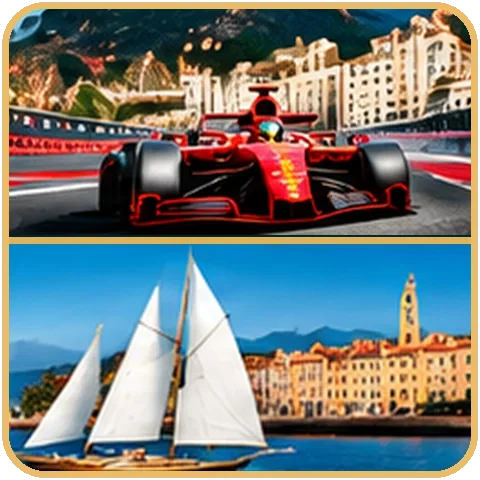
The most useful visit combines a look at the site itself with an understanding of the wider district. This English adaptation retains the themes of its French source, but practical details, opening rules, event schedules and historical dates should be checked with current authoritative sources before publication. The accompanying image is generated editorial artwork, not photographic evidence of the site.
Dans ce dossier
Guide principal : Monaco Landmarks: Ten Essential Places to Discover
- Casino de Monte-Carlo: 10 Facts Behind Its History
- Hôtel de Paris Monte-Carlo: The Story Since 1864
- Opéra de Monte-Carlo: Seven Details of the Salle Garnier
- Place du Casino Monaco: Five Reasons It Became an Icon
- Oceanographic Museum of Monaco: Eight Reasons to Visit
- Prince’s Palace of Monaco: Seven Spaces and Traditions
- Monaco Cathedral: Seven Keys to a Princely Landmark
- La Condamine Market: Seven Monaco Food Traditions
- Grimaldi Forum Monaco: Six Keys to Its Architecture
- Japanese Garden Monaco: Six Principles Behind Its Design
Questions fréquentes
What makes the square famous?
It combines several architectural and hospitality landmarks in a single compact public space.
Is it worth visiting without gambling?
Yes. The architecture, gardens and exterior setting are significant in their own right.
When is the best time to visit?
Daylight reveals details; evening offers another atmosphere. Choose according to the type of visit and current access conditions.